
I inherited my grandmother’s green thumb, or at least, that is the explanation I have chosen to believe. Over the years, I have quietly transformed my home into what can only be described as a jungle in progress, one pot at a time. Every available corner seems to contain something green. A trailing vine here. A hopeful cutting there. A rescued plant recovering from neglect in a sunny window. Wherever I turn, there is usually a plant smiling back at me.
Much like the cats, many of them arrived unexpectedly. Some were gifts. Some were rescues. Others began life as tiny cuttings offered by friends and neighbours. Somewhere along the way, I stopped asking for cut flowers altogether. Instead, I ask for potted plants or cuttings that I can root and nurture into something lasting. A bouquet is lovely, but a thriving plant is a relationship.
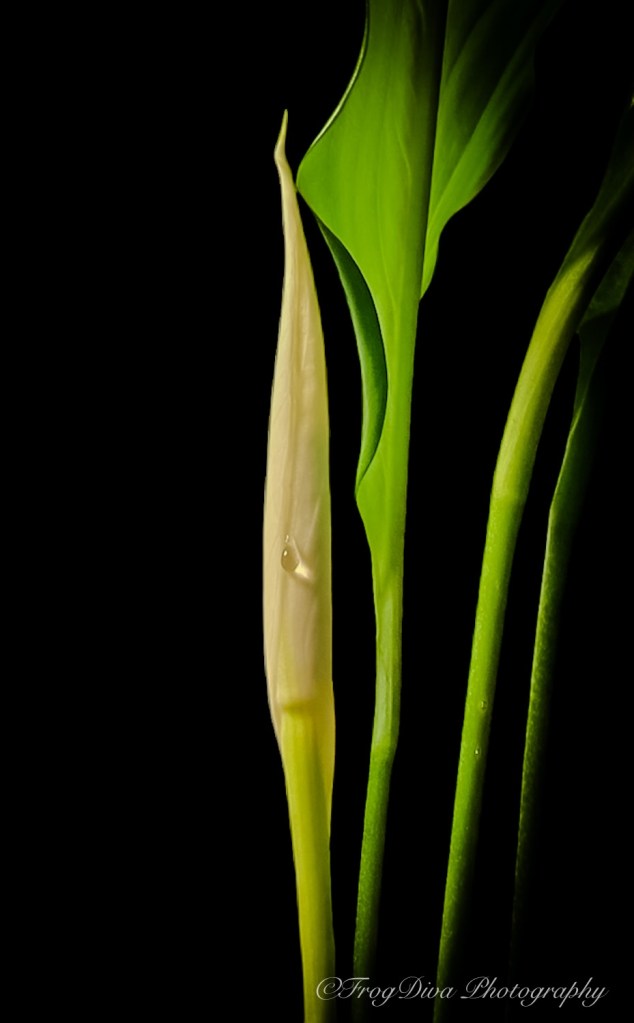
My relationship with plants deepened shortly after I moved to Lisbon. At the time, I was living in a small hotel room while beginning a new chapter of life. Everything felt temporary. The furniture was not mine. The routines had not yet formed. Even the city felt unfamiliar. One afternoon, on my walk home, I passed a plant shop and bought a small peace lily. I simply needed something green on the windowsill. Something alive. Something growing.
That little peace lily turned out to be far more ambitious than I anticipated. Three years later, it has multiplied into well over a dozen thriving plants spread throughout the house. Every time one of them flowers, I smile because I have come to regard it as an announcement that good news is on the way. Rationally, I know there is no scientific basis for this belief. The peace lilies have not consulted the universe before producing flowers. Nevertheless, the timing has been uncanny often enough that I have chosen not to argue with them.
The peace lily was not the only plant that accompanied me through those early days. During my very first week at work in Portugal, a new colleague discovered my fondness for plants. The following morning, I arrived at my desk to find a Tupperware container waiting for me. Inside were several cuttings from her own collection. It was such a simple gesture that she may not even remember it today. I certainly do.
At a time when everything felt unfamiliar, those cuttings became a small act of welcome. I placed them in jars of water, watched roots slowly emerge, and eventually transferred them into pots of their own. Three years later, many of those plants are still with me. They have travelled from windowsill to windowsill, survived repotting experiments, endured my occasional horticultural optimism, and evolved into thriving little ecosystems in their own right.
Every time I look at them, I am reminded that growth often begins with generosity. The colleague probably thought she was giving me a few plant cuttings. What she really gave me was a sense of belonging.
The monstera followed a similar path. I adopted one shortly after arriving in Portugal and quickly discovered that monsteras possess very different ambitions from peace lilies. While the lilies quietly multiplied, the monstera embarked on what can only be described as an octopus-like campaign for world domination. Eventually, it became necessary to intervene. What I considered a sensible pruning operation was viewed by the monstera as a propagation opportunity. Today, there are three monsteras in the house, all descendants of the original plant and all apparently determined to continue the family tradition.
My most recent botanical experiment involves sweet potatoes, a sentence I never expected to write. Several sweet potatoes now sit in jars of water around the house, enthusiastically producing roots and trailing vines that seem determined to transform the living room into a tropical ecosystem. What began as curiosity quickly became fascination. There is something deeply satisfying about watching vigorous new growth emerge from an ordinary kitchen vegetable.
Outside, the butternut squash appears equally ambitious. What started in a few modest pots has burst forth with remarkable enthusiasm, sending tendrils and leaves in every direction. If all goes according to plan, there may even be a late summer harvest. Symbols of abundance? Symbols of new beginnings? Perhaps. Or perhaps they are simply plants doing what plants do best: growing.

Whatever the explanation, the effect is undeniable. The house feels alive. The rooms feel softer. The atmosphere feels calmer. Every new leaf, every flower, and every unexpected burst of growth serves as a quiet reminder that life is constantly renewing itself.
Plants have their own way of expressing gratitude. Not in the obvious sense, although healthy leaves, fresh growth, and unexpected flowers certainly help. Their gratitude is quieter than that. A neglected corner suddenly feels alive. A room feels warmer. The atmosphere changes. You find yourself lingering a little longer over your morning coffee. You feel calmer, more grounded, and more present.
The rational part of my brain knows there are scientific explanations for some of this. Researchers have found that exposure to plants and natural environments can reduce stress, improve mood, lower anxiety, and support mental wellbeing. Natural light helps regulate our biological rhythms, while gardening has been linked to improved mental health and increased life satisfaction.
Science explains these effects through biology. Many spiritual traditions explain them through energy. Personally, I have reached the point where I am not particularly concerned about which explanation is correct. I simply know how I feel.
When I spend time tending plants, watering the garden, repotting something that has become rootbound, or coaxing a struggling cutting back to health, my own energy shifts. I feel lighter, more optimistic, more connected, and less hurried. Perhaps the plants are changing me. Or perhaps they are reminding me of something I already know.
Plants never rush. They do not compare themselves to neighbouring plants. They do not panic because they have not produced a new leaf this week. They trust the process. Roots first. Growth later. Flowers when the time is right.
Every summer I notice this lesson becoming more visible. The herbs flourish. The fruit ripens. The garden becomes generous. Even the houseplants seem determined to remind me that life is designed to grow toward the light.
Maybe that is why plants feel so energetically uplifting. Not because they are generating magic, but because they are constantly modelling it. Transformation. Renewal. Resilience. Growth after setbacks. Life after dormancy. The courage to begin again from a tiny cutting.
The older I become, the more convinced I am that positive energy is not something we create from scratch. It is something we cultivate through a little sunlight, a little patience, a little care, a few living things to nurture, and a few moments of stillness, and perhaps a home filled with plants and cats. Both seem remarkably determined to teach us how to be present, and both, in their own peculiar ways, have a habit of making a house feel alive.


Leave a comment