
Black cats have one of the worst public relations problems in history. For centuries they have been accused of everything from assisting witches to causing bad luck, failed journeys, mysterious illnesses, and general misfortune. Entire generations have crossed streets to avoid them. Some people still become uneasy when a black cat crosses their path.
Having spent a good part of my life around black cats, I find these accusations both unfair and wildly inaccurate.
In my experience, black cats are not agents of bad luck. They are agents of chaos. There is a difference.
One black cat I know expresses his political opinions by urinating in visitors’ suitcases. He does not do this randomly. He does it with purpose, precision, and what appears to be complete moral certainty. The message is clear: “I did not approve this visit, and I want my objections entered into the official record.”
This is not bad luck. This is feline diplomacy. In fact, diplomacy may be too gentle a term. This is closer to sanctions.
My own relationship with black cats became more interesting after I moved to Portugal. Two black cats gradually adopted my home. Nobody asked my permission. Nobody sought my approval. One day they appeared, and over time they made it abundantly clear that they had decided I worked for them.
For the most part, they behave like slightly deranged aristocrats. They sprint through the house at invisible enemies. They become fascinated by objects that do not exist. They stare intently into corners where there is apparently nothing to see. They disappear for hours and then reappear looking unusually pleased with themselves.
Their social life remains something of a mystery. Every now and then, I walk home and find not one, not two, but three black cats casually gathered in front of my house. They sit there silently glaring at me as though I have disappointed them in some profound and unforgivable way. The scene always gives me a Harry Potter vibe, as if I have accidentally interrupted a meeting of the local magical council and am now being judged for arriving late.
At the same time, they are fiercely loyal. They greet me at the door, accompany me through the garden, and occasionally repay their room and board by delivering birds or mice. This arrangement would be more appreciated if they did not insist on presenting their gifts while the unfortunate recipient is still moving.
After years of observing these creatures, I have reached a conclusion. If black cats possess supernatural powers, those powers are mostly directed toward manipulating humans.
That realization led me to wonder how black cats acquired their reputation as symbols of bad luck in the first place. The answer is surprisingly complicated because much of the world believes exactly the opposite.
Far from being omens of doom, black cats have been associated with prosperity, protection, romance, fertility, and good fortune in cultures across the globe. Their reputation depends entirely on where you happen to be standing.
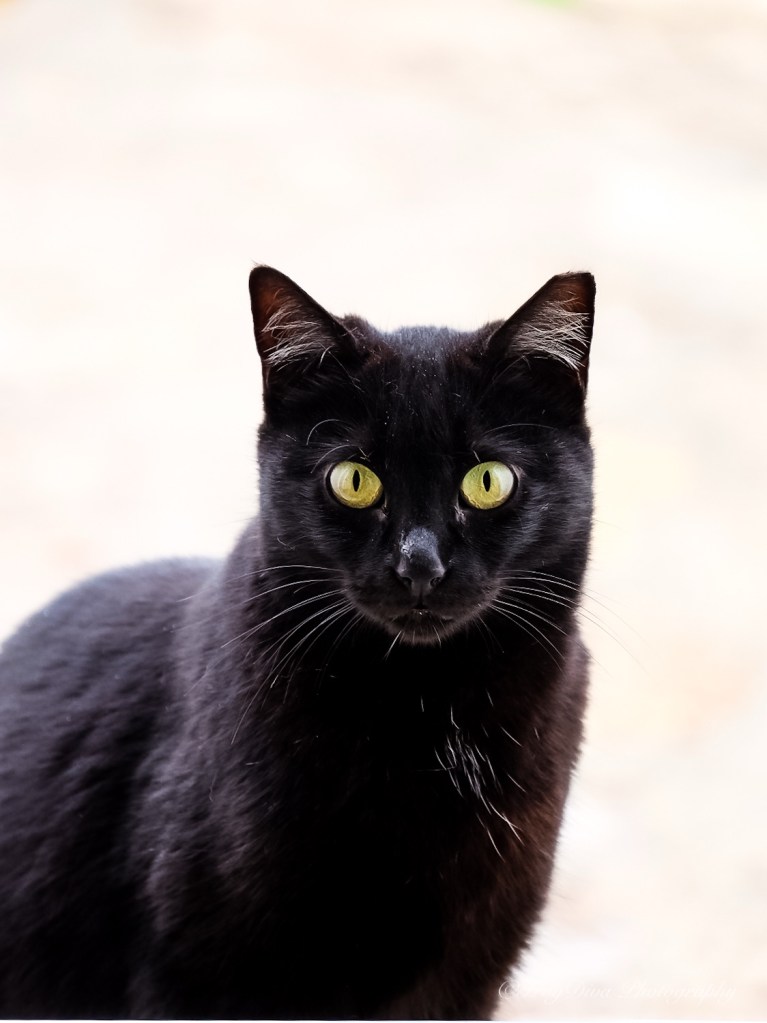
The idea that black cats are unlucky can largely be traced to medieval Europe. During the Middle Ages, black animals of all kinds became associated with darkness, mystery, and the unknown. As fears surrounding witchcraft spread, black cats became unfortunate victims of popular imagination. People began to believe that witches kept black cats as companions or could transform themselves into cats. During the witch hunts that swept across Europe, the animals became symbols of suspicion and fear.
The irony is that this dark chapter represents only a small portion of the black cat’s history.
Thousands of years earlier, cats enjoyed a far more prestigious reputation in Ancient Egypt. They were associated with Bastet, the goddess of protection, fertility, home, and motherhood. Cats were revered, protected, and treated as sacred animals. Rather than symbols of misfortune, they were considered guardians of households and bringers of blessings.
Japan offers one of the strongest counterarguments to the black cat’s unfortunate reputation. In Japanese folklore, black cats are often regarded as lucky. Some traditions hold that they bring protection and prosperity, while others suggest they are especially fortunate for women seeking romantic success. The famous Maneki-neko, or beckoning cat, appears in many forms, and black versions are often associated with protection from negative influences.
Scotland also gives black cats a much warmer reception. Traditional Scottish folklore holds that a strange black cat arriving at your doorstep is a sign that prosperity is on its way. Rather than viewing the animal with suspicion, people welcomed it as a harbinger of abundance.
In parts of England, black cats have long been considered lucky. There was even a time when a black cat was regarded as an auspicious wedding gift because it was believed to bring happiness and good fortune to a marriage. This presents a refreshing contrast to modern superstitions that portray black cats as something to avoid.
Sailors historically viewed black cats as especially fortunate companions. Ship captains often welcomed them aboard vessels, believing they would ensure safe journeys and favorable conditions at sea. Fishermen’s wives sometimes kept black cats at home, convinced that the animals would protect their husbands while they were away on dangerous voyages.
In parts of France, black cats known as matagots were believed to attract wealth and prosperity when treated with kindness and respect. Stories described them as mysterious creatures capable of bringing good fortune to households that cared for them properly.
When viewed collectively, these traditions reveal something fascinating. Much of the world has historically regarded black cats as lucky.
This raises an obvious question. If black cats are associated with prosperity in so many places, where did these positive beliefs originate? Part of the answer may be surprisingly practical.
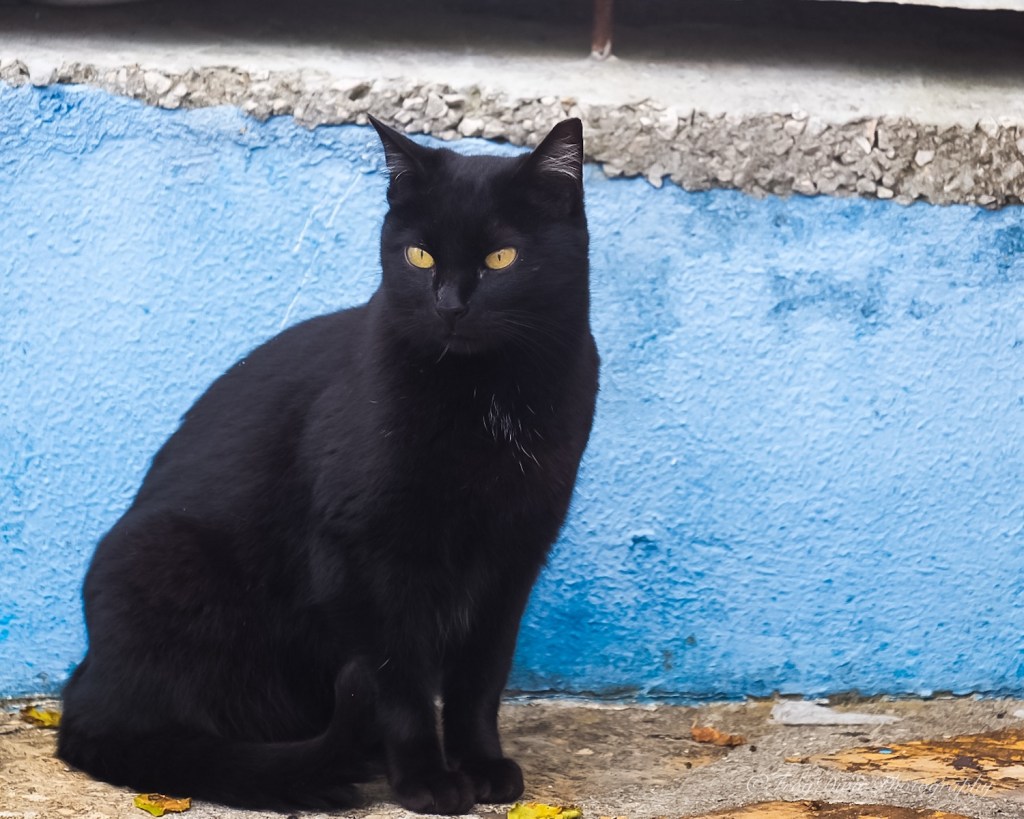
For centuries, cats protected homes, granaries, farms, and ships from rats and mice. In agricultural societies, rodents could destroy food supplies, spread disease, and threaten a family’s survival. A skilled mouser protected resources and preserved wealth. In very real terms, a good cat contributed directly to a household’s prosperity.
Since moving to Portugal, I have become the reluctant steward of two black cats who adopted me without consultation. Their activities include conducting mysterious meetings with other black cats, delivering unsolicited wildlife donations, sprinting through the house at invisible adversaries, and staring into the middle distance as though receiving updates from another dimension. Despite this behavior, they are fiercely loyal and seem genuinely invested in my well-being, provided I continue meeting my food-service obligations.
The symbolism becomes even more interesting when viewed through the lens of Feng Shui. Contrary to popular belief, traditional Feng Shui does not regard black cats as unlucky. Black is associated with the Water element, which represents wisdom, intuition, depth, adaptability, and flow. Animals are generally considered sources of vibrant living energy within a home, and a healthy, well-loved pet contributes positive qi regardless of its color.
Many Feng Shui practitioners believe that cats are particularly sensitive to energy. Their tendency to gravitate toward certain spaces and avoid others is often interpreted as an intuitive response to their environment. Anyone who has lived with a cat might suspect that they are aware of things the rest of us are not.
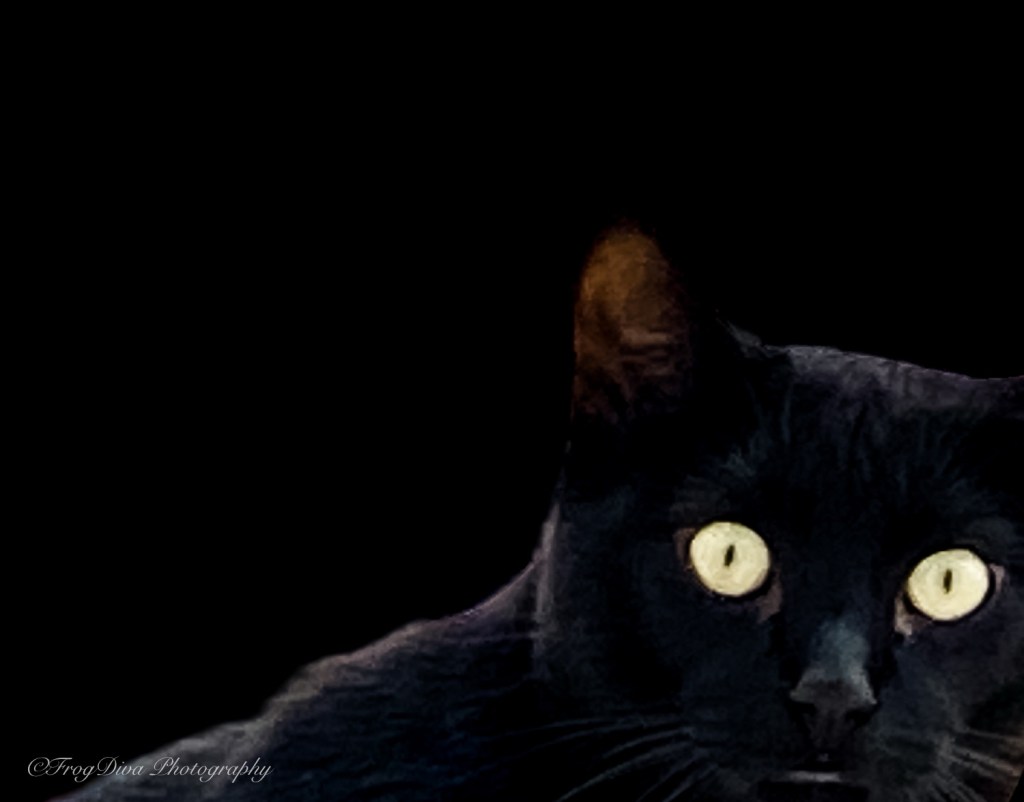
Then again, anyone who has watched a black cat suddenly sprint through a room at three in the morning for reasons known only to itself might also conclude that some mysteries are best left unsolved.
Perhaps that is the real lesson hidden beneath centuries of folklore. The story of the black cat says far more about human beings than it does about cats. Across history, people have projected their fears, hopes, beliefs, and anxieties onto these animals. In one culture, a black cat becomes a symbol of witchcraft. In another, it becomes a guardian of prosperity. The cat itself remains unchanged.
The black cats in my life certainly seem unconcerned with the debate. They continue to hold secret meetings outside my house, enforce territorial policies with alarming confidence, and deliver unsolicited gifts from the local wildlife population. They have never brought me bad luck. They have, however, repeatedly given me reasons to question who is actually in charge.
Perhaps black cats are not omens of misfortune at all. Perhaps they are simply members of an ancient feline supervisory board whose purpose is to observe humanity, pass judgment, and occasionally pee in a suitcase when standards are not being maintained.
If a black cat crosses your path, there is probably no reason to worry. Somewhere in Scotland, Japan, England, France, or Ancient Egypt, that encounter would be considered a sign of good fortune. The cat is unlikely to curse your future, sabotage your finances, or summon dark forces. It may, however, stare at you with profound disappointment and silently judge your life choices. That possibility seems considerably more likely.
 The Esoteric Frog
Leave a comment