The most sacred time of the day for me is when silence falls over the Shire at night. It does not arrive all at once, but settles slowly, like the world exhaling after a long day of being seen. Edges soften, sounds retreat, and something older, quieter, begins to take its place. That is when he begins.
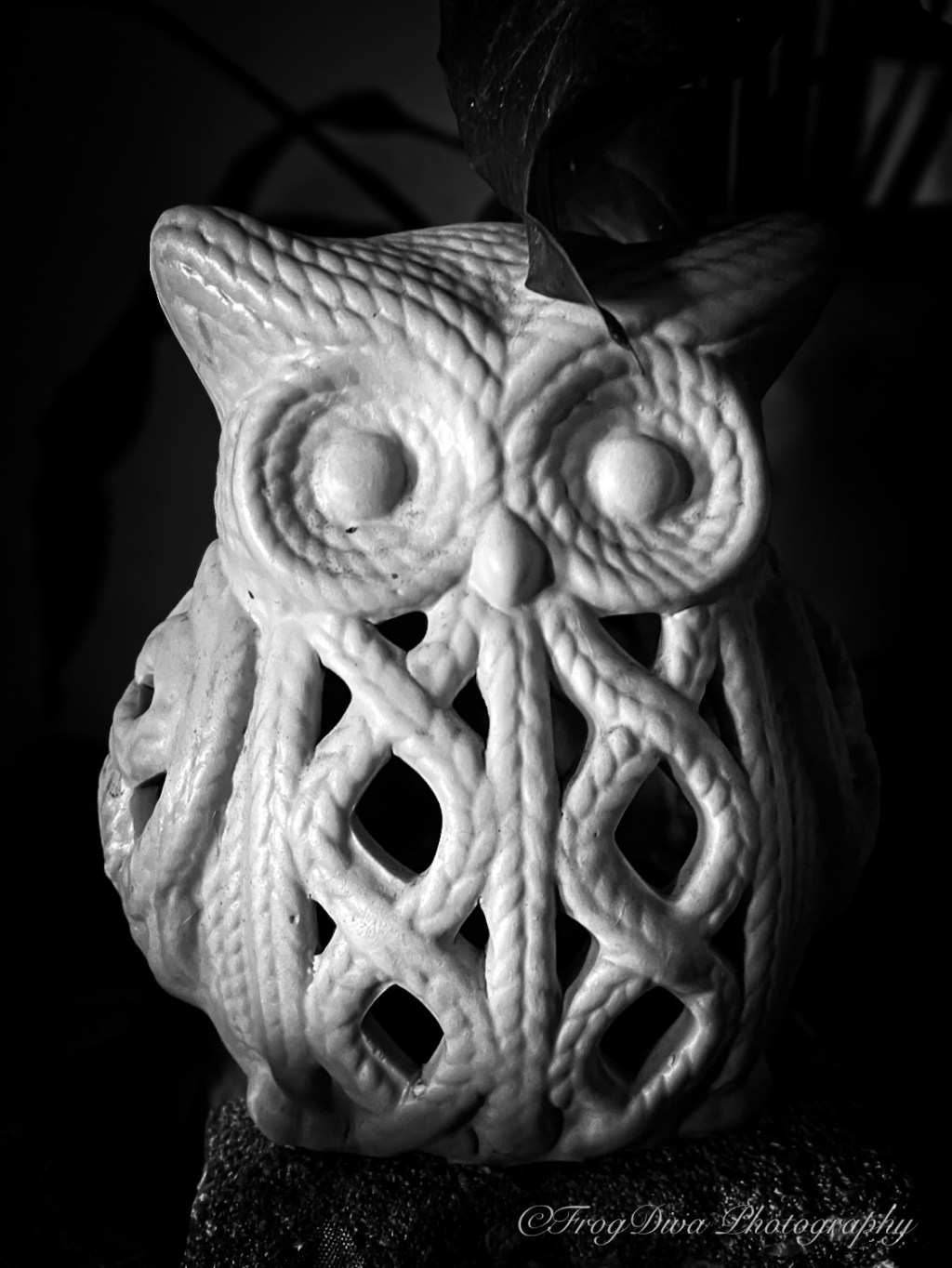
From a nearby tree, without fail and without introduction, the owl delivers his nightly sermon with a dignity and solemnity that always remind me of one of my university professors. It is not rushed, not loud, and certainly not concerned with whether anyone fully understands. A series of measured hoots, spaced with intention, each one landing as though it carries weight far beyond its sound. It feels less like noise and more like a message that has chosen its moment carefully.
I always answer. Of course I do. What self respecting animal communicator would not? I do not respond in hoots, which would likely confuse us both, but in thought, in presence, in that subtle reaching out that does not require language. Whether it is imagination or something more refined does not seem particularly important, nor do I speak human words, let alone frog croaks. One does have a reputation to maintain. What would the neighbours think? Not to mention that my cats, and all the neighbours’ dogs, would feel profoundly betrayed. Nevertheless, there is a rhythm between us, a familiarity. We have never met face to face, yet there is an awareness, as though we have quietly agreed to acknowledge one another across the dark.
He speaks. I listen. I respond. He answers.
It is, by all accounts, an unconventional arrangement, though one suspects the owl has had stranger conversations.
Owls, despite their reputation for silent wisdom, are surprisingly expressive. Their calls are not random musings on the state of the universe, although it is tempting to believe they are. Each hoot carries purpose. Some declare territory with a calm but unmistakable confidence, a kind of “this branch is currently occupied, kindly adjust your expectations.” Others are invitations, courtship calls, or quiet check ins between mates who prefer conversation over grand gestures.
There are also sounds that do not fit the poetic narrative at all. Screeches that could rearrange one’s sense of calm, hisses that suggest boundaries are being firmly reinforced, and the occasional beak clicking that feels less like wisdom and more like commentary. It is a useful reminder that communication, even at its most profound, is not always elegant.
Then there is the silence. Owls do not simply exist in it, they shape it. Their flight is nearly soundless, their presence more felt than announced. They arrive without interruption, observe without interference, and leave without ceremony. There is something deeply instructive in that. Not every message needs volume. Not every presence needs explanation.
Somewhere along the way, humans looked at an owl and decided, collectively and with surprising confidence, that this creature represented wisdom. It is not difficult to see why. The eyes alone suggest a level of awareness that feels both reassuring and mildly unsettling, as though nothing escapes their notice, including thoughts one had hoped to keep private.
Stillness plays its part. Owls do not rush. They wait. They watch. They turn their heads with a precision that feels less like movement and more like intention. In ancient Greece, the owl stood beside Athena, becoming a symbol not just of knowledge, but of insight, the kind that does not shout but quietly rearranges what you thought you knew.
Other traditions approached the owl with a little more caution, placing it at the threshold between worlds, a messenger, a watcher, a keeper of things not easily explained. Wisdom, it seems, has always carried a trace of mystery, and perhaps a gentle warning that not everything needs to be fully understood to be respected.
Our stories did what stories do and made the owl more familiar. There was the well meaning but slightly overconfident Owl who could speak at length without necessarily improving clarity, a character who proved that sounding wise and being wise are not always the same. There were loyal messengers who carried meaning across impossible distances, and practical voices of reason who found themselves surrounded by chaos and doing their best to maintain order.
Each version reflects something we recognise. Wisdom is not always serene. Sometimes it is patient, sometimes it is practical, and sometimes it is quietly wondering how everyone else has made things quite so complicated.
“My” owl, Herr Professor Doktor Eule, who probably has a perfectly respectable Portuguese name but sounds unmistakably German to me, does not concern himself with mythology or literary expectations. He has his tree, his timing, and his voice. He speaks when the world is ready to listen, or perhaps when he decides it should be.
There is something quietly extraordinary in sharing space with a being you have never seen clearly, yet know is there. No introductions, no definitions, no need to prove anything. Just a presence that meets you where you are, in the space between sound and meaning.
It raises certain questions. Is he responding, or am I simply hearing what I am ready to hear? Is this communication, or participation? Who, exactly, is leading this conversation? Professor Doktor Eule, one suspects, would not be overly concerned with the distinction.
There is also something undeniably amusing about the whole exchange. Somewhere in the night, an owl delivers what feels like a deeply considered address to the universe, and a human stands nearby, nodding in agreement as though attending a very exclusive lecture series with limited seating and no written syllabus.
It is not entirely clear who is teaching whom. Perhaps that is the point.
There is a tendency to overcomplicate connection, to assume it requires structure, training, or a formal understanding of technique. The owl offers a different perspective. He speaks. I listen. I respond. He answers. No certification required, no translation necessary, and no pressure to get it exactly right.
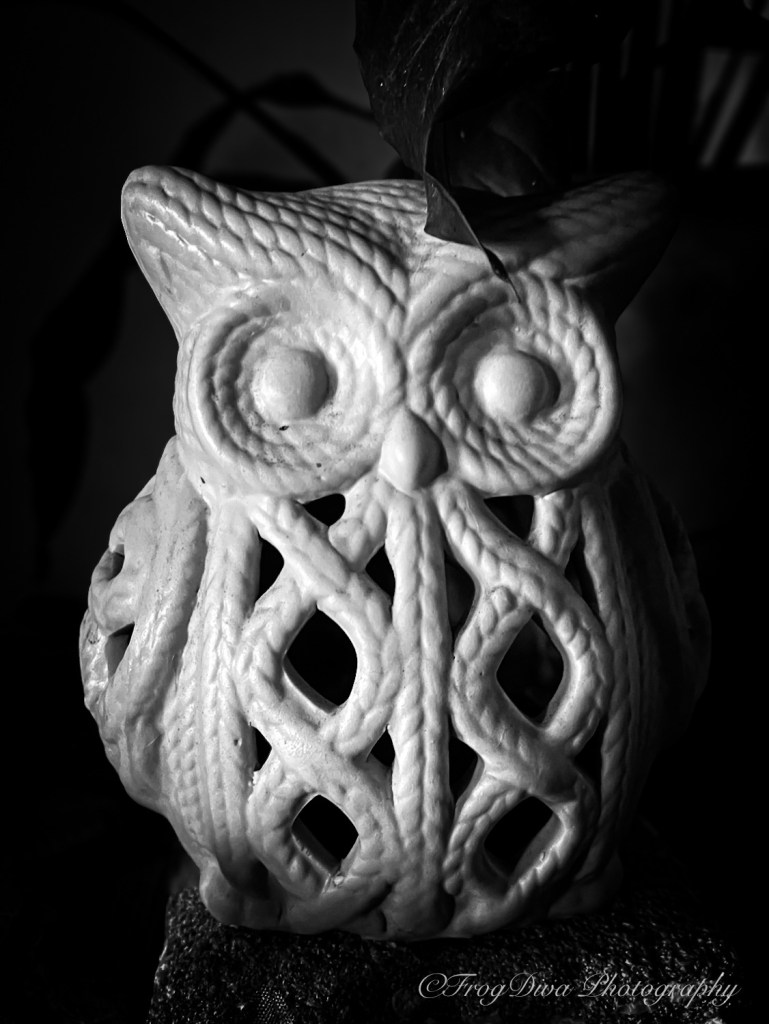
Perhaps wisdom is not something we acquire, but something we remember how to notice. On certain nights, when the world has softened enough to allow it, that remembering arrives as a steady, patient hoot from a nearby tree. Not a command, not a lesson, but an invitation to pay attention. To listen a little more closely. To trust what cannot always be explained. To recognise that connection does not always require visibility.
Should you find yourself in conversation with a nocturnal philosopher of your own, it may be worth listening carefully. They tend to know things.
May the hoot be with you.
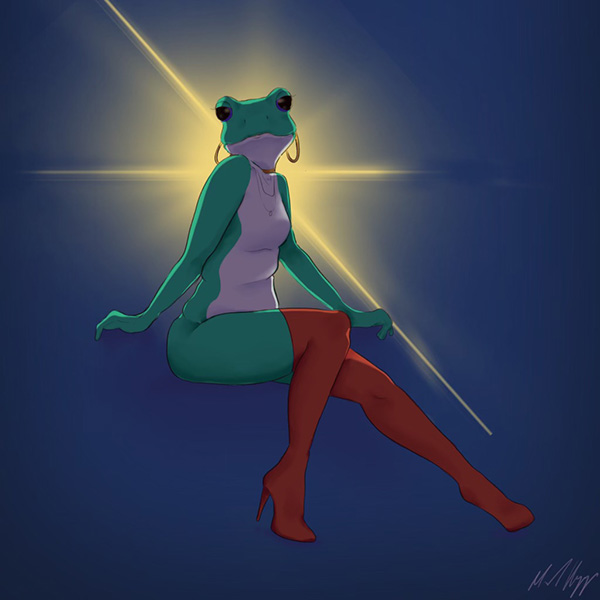
 The Esoteric Frog
Leave a comment